Ecological Succession: A Nature-First Look
Everything in nature has a lifespan. Not just how long it lives, but when it arrives and at what levels, and what it leaves behind for what comes next.
A bare patch of earth doesn’t stay bare. The first things to arrive are fast, opportunistic, short-lived. Weeds, grasses, pioneer plants. They take raw sunlight and poor soil and they make something of it. And in making something of it, they change the conditions. They shade the ground. They drop leaves. They make the soil richer and more fertile. They die, and become soil. They create the conditions for the next thing.
The next thing couldn’t have survived in the original conditions. It needed what the predecessors built. Maybe it’s a shrub, something with a little more structure, a little more permanence. It grows slower, lives longer, roots deeper. And it too changes the conditions. More shade. More organic matter. More complexity.
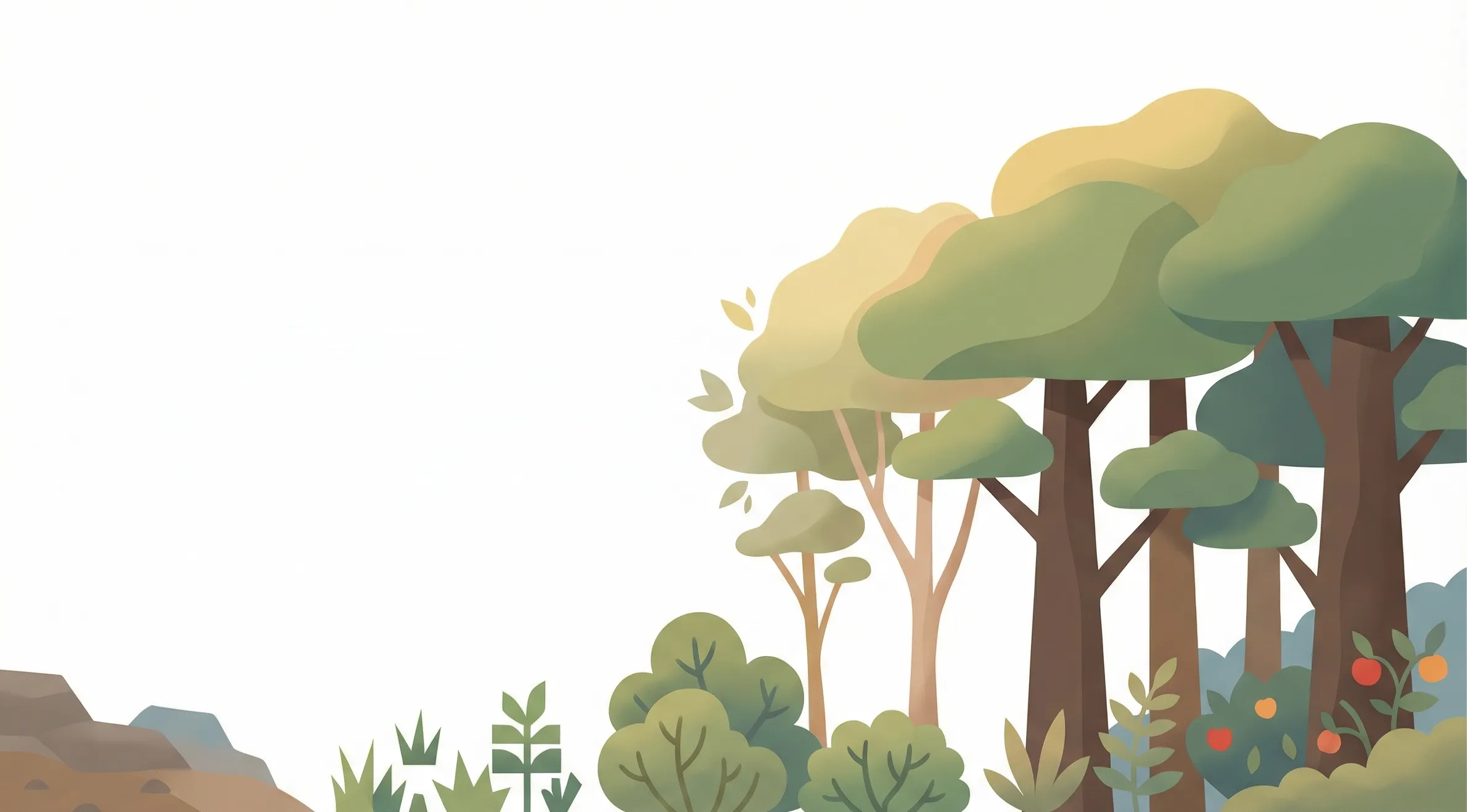
Then come some more complex plants, trees. The ones that may stand for decades, centuries. Many couldn’t have germinated nicely on that original bare patch. Too harsh, too exposed. But now the ground is ready. The layers beneath them did the work.
This is succession, a sequence that emerges because each stage creates the conditions for the next. The fast and fragile make way for the slow and enduring. And all of them coexist for a time, overlapping, handing off.
Nothing is wasted. The pioneer that dies always going to die. Its death is part of its function. It becomes the soil that feeds the tree that will outlive it by a hundred years.
It’s asynchronous and emergent — that’s the crux. It’s not linear but layers in time. The annual, the perennial, the shrub, the canopy tree, they can all exist together, each on its own clock, each contributing to the whole at its own rhythm. An integrated system.
The forest you see today is a snapshot of overlapping lifespans. Some things are arriving, some are peaking, some are declining, some are returning to earth. And the system holds all of it at once.
That’s succession. Not a march toward a final state, but a continuous folding of time, where what came before is always present in what exists now.
Leave a Reply